


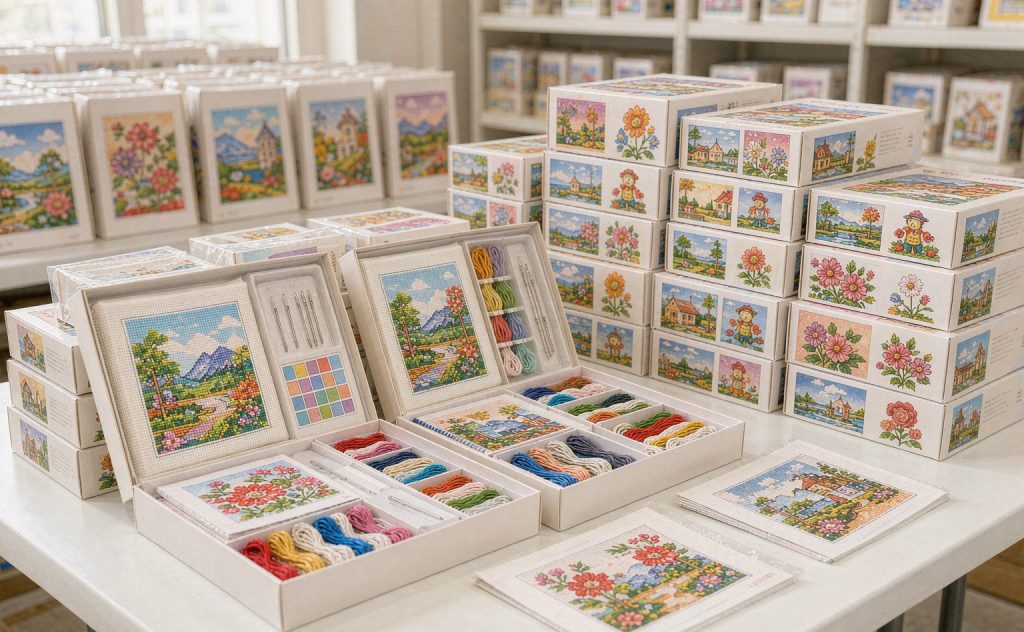
Wholesale cross stitch kits are one of the most resilient niches in the global craft and hobby market. Whether you run a retail chain, an online store, or a dropshipping business, buying directly from a cross stitch kit manufacturer gives you better margins, consistent quality, and full control over branding. This guide walks B2B buyers through everything that matters before placing a first order: what goes into a professional kit, how to choose canvas types and aida gauges, what OEM/ODM customization really includes, and how to sanity-check quality before you commit.
Why Cross Stitch Kits Are a Strong Category for B2B Buyers
Cross stitch has kept a loyal global audience for decades, and the kits segment keeps growing because it removes friction for hobbyists: everything needed to finish one project arrives in a single box. For B2B buyers this translates into three practical advantages:
- Broad audience appeal. Kits sell to complete beginners, intermediate crafters, and gift buyers alike, across ages and markets.
- Lightweight, low-risk logistics. Kits are compact and shippable by air or sea without special handling, which keeps freight costs predictable.
- Endless SKU expansion. One design library can feed hundreds of SKUs — flowers, animals, landscapes, still life — without changing your packaging format or production line.
If you are building a catalog from scratch, a sensible first assortment is a few dozen proven designs rather than a long tail of guesses. You can browse our best-selling cross stitch kits to see which themes consistently move the fastest.
What Is Inside a Professional Cross Stitch Kit?
Kit quality is judged the moment a customer opens the box, so knowing the standard components helps you compare suppliers objectively. A complete retail-ready kit should include:
- Aida fabric cut to size for the design, edges prepared against fraying
- Embroidery threads — color-fast cotton floss, sorted and pre-sorted on a palette or organizer
- Needle(s) matched to the fabric gauge
- Printed pattern chart with symbol grid, thread legend, and stitching instructions
- Instructions suitable for the target market (language matters for B2B buyers)
- Optional accessories: embroidery hoop, thread sorter card, and a full-color finished-picture reference
Counted vs. Stamped (Printed) Canvas
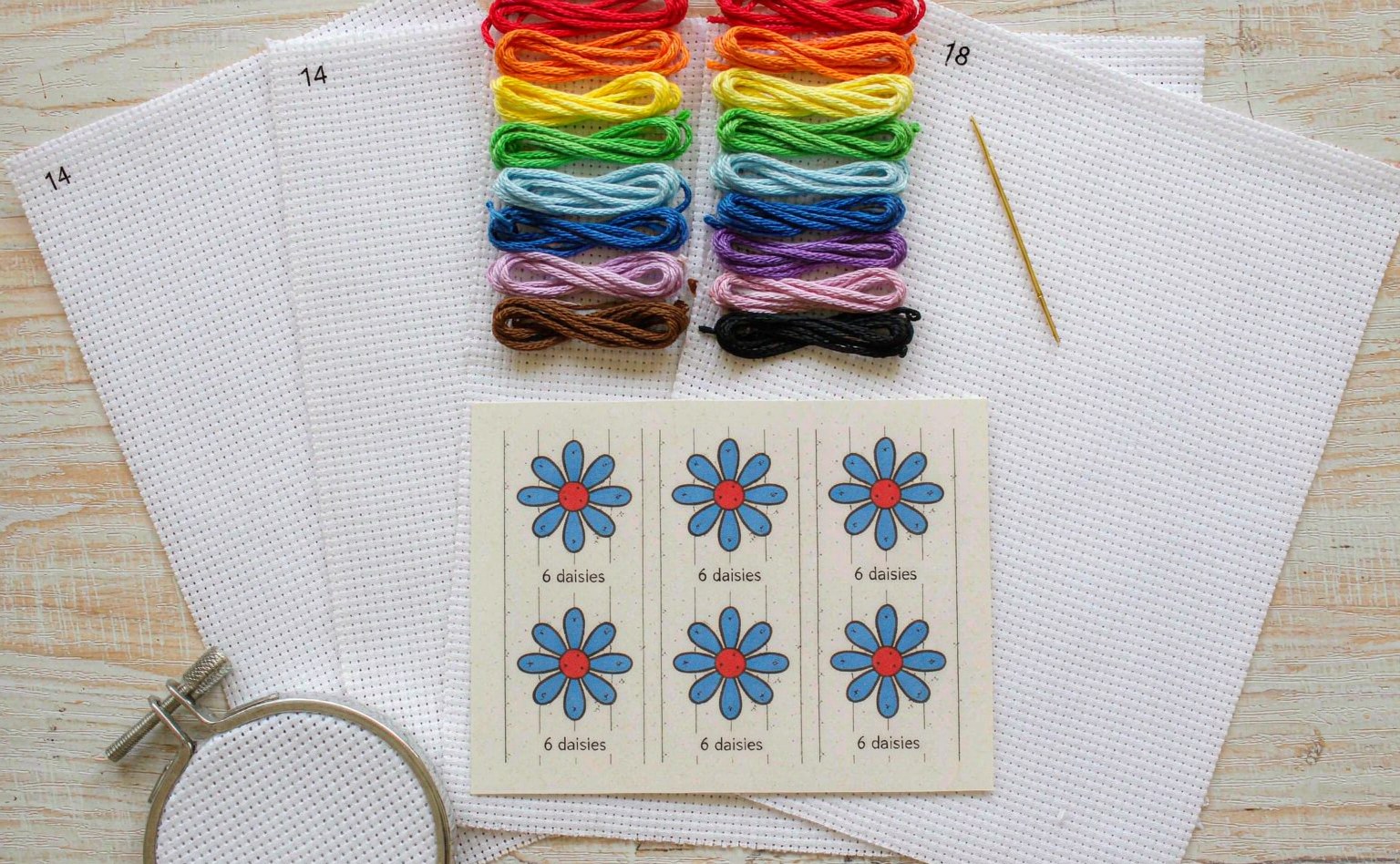
The single biggest fork in the kit category is the canvas type. Most established suppliers, including BOHUI, offer both as a product attribute — the same design is often produced in two versions:
| Type | How it works | Best for | B2B considerations |
|---|---|---|---|
| Counted (unprinted) | Stitcher reads the chart and counts threads on blank aida | Traditional crafters, higher-end kits | Lower printing cost; pattern accuracy is critical |
| Stamped / printed | Design grid is printed directly on the fabric | Beginners, kids, gift-market kits | Printing quality defines perceived value; great for impulse retail |
Aida Gauges Explained: 11CT, 14CT, 16CT
Aida fabric comes in different gauges (“CT” = counts per inch, i.e., the number of fabric squares per inch). Gauge controls both the finished size of a design and the difficulty:
| Gauge | Squares per inch | Character | Typical positioning |
|---|---|---|---|
| 11CT | 11 | Large squares, fast to stitch | Beginners, kids, large-format home decor |
| 14CT | 14 | The most common all-round gauge | Mainstream retail kits, balanced detail and speed |
| 16CT | 16 | Fine squares, more detail | Advanced hobbyists, premium artwork reproductions |
The same artwork at the same chart size produces a larger finished piece on 11CT and a smaller, finer one on 16CT. When comparing quotes from different factories, always confirm the gauge and the finished size — a lower unit price on a smaller gauge can quietly reduce the perceived value of the kit. Our beginner-friendly range covers all three gauges; you can view the full cross stitch kit catalog filtered by theme and specification.
Sourcing Models: Wholesale, OEM/ODM and Dropshipping
B2B buyers usually enter through one of three doors, and the right one depends on how much control you want:
- Stock wholesale. You buy ready-made kits from the factory’s existing design library at tiered volume pricing. Fastest route to market — ideal for testing which themes sell in your market.
- OEM. The factory produces kits from its own designs but under your brand: your logo, your packaging, your barcode. Best when you want a branded shelf presence without investing in artwork.
- ODM / full custom. You supply or co-develop the artwork and specification, and the factory engineers the complete kit — chart digitizing, thread matching, fabric printing, packaging. This is the route for exclusive private-label lines.
What OEM/ODM Customization Typically Includes
A capable manufacturer should be able to handle the full customization stack in-house:
- Chart design and digitizing from your artwork or photo
- Thread color matching and palette optimization
- Canvas printing (for stamped versions) and precision cutting
- Custom box design, inserts, and multilingual instruction booklets
- Barcode labeling and Amazon FBA-ready or dropship-ready packing
You can review the scope of our OEM/ODM custom cross stitch kit service for details on artwork submission and sampling.
MOQ, Lead Time and Pricing Structure
While exact terms vary by supplier and specification, B2B buyers should expect this general shape:
- Stock wholesale: small MOQs (often by the carton), immediate lead time, tiered pricing by volume.
- OEM private label: moderate MOQs to cover custom printing and packaging setup, typically a few weeks of production after sample approval.
- ODM full custom: sampling time for chart digitizing plus production; budget a longer runway but gain an exclusive product line.
Two cost drivers are worth negotiating explicitly: thread count (more colors = higher material and sorting labor) and packaging format (box vs. bag changes both unit cost and freight volume).
Packaging and Branding Options
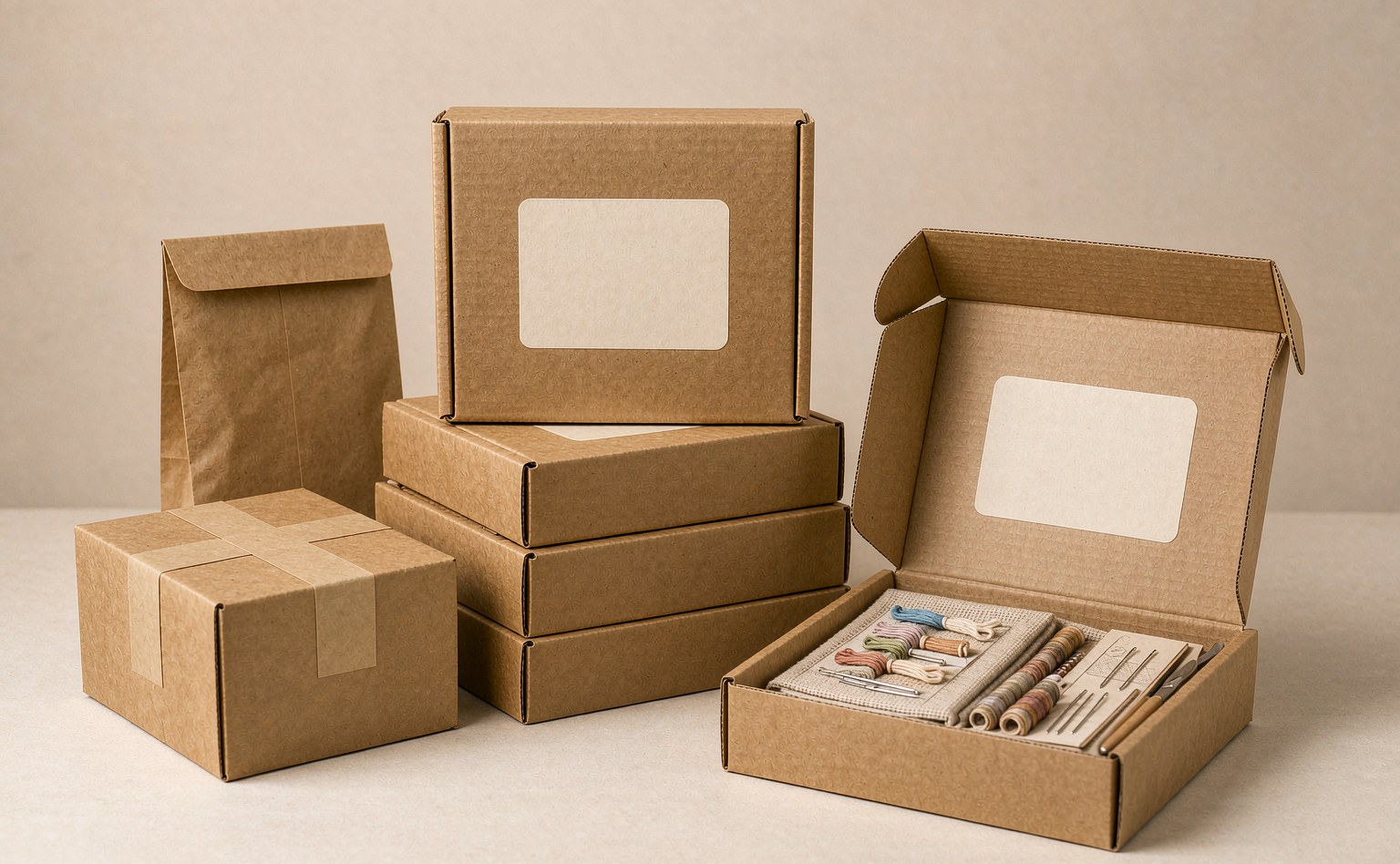
Packaging is where OEM buyers create the most visible differentiation. Common options include printed art boxes with a finished-picture window, eco kraft boxes with a blank label area for your brand, poly bags for economy programs, and barcoded retail-ready packaging. For marketplaces and dropshipping, ask the factory for plain, undamaged outer packaging — it reduces returns and protects your brand experience.
A Pre-Order Quality Checklist
Before committing to any supplier of wholesale cross stitch kits, run through this checklist:
- Thread quality: color-fastness certificates or wash-test samples; threads should not bleed or fade.
- Chart accuracy: request a sample kit and stitch a section — symbol-to-color errors are the most common defect.
- Fabric printing registration (stamped kits): grid alignment must sit exactly on aida squares.
- Completeness: pack-out verification that every kit contains the correct threads, needle, and instructions.
- Compliance: needle count warnings and small-parts labeling for markets that require them.
- Sample before bulk: a paid pre-production sample is standard practice and always worth it.
New to evaluating craft kits as a buyer? Our beginner’s guide to cross stitch explains the stitching basics from the consumer’s side — useful context for judging what your customers will experience.
Why Buy Directly From BOHUI?
BOHUI is a cross stitch kit factory based in Liuzhou, Guangxi, China, producing and exporting DIY cross stitch kits for wholesale buyers, distributors, and dropshippers worldwide. The catalog covers 500+ designs across flowers, animals, landscapes, and still life, each available as counted or printed canvas in 11CT, 14CT, and 16CT gauges. Buying factory-direct means tiered wholesale pricing, OEM/ODM customization under your own brand, and dropshipping-friendly fulfillment from a single source.
Ready to source? Contact us for the wholesale catalog and a quote — tell us your target market, expected volumes, and whether you need stock designs or a custom private-label line. Answers to common sourcing questions are also covered on our FAQ page.
Frequently Asked Questions
What is the typical MOQ for wholesale cross stitch kits?
For stock designs, factories commonly sell by the carton with low minimums. For OEM custom packaging, minimums are higher because printing and die-cutting have setup costs — usually a few hundred units per design. Mixed-design assortments within one order are a practical way to reach MOQ while still testing themes.
Can I put my own brand on the kits?
Yes. With OEM service, the factory supplies kits under your brand — custom box, logo, instructions, and barcode. With ODM, you can go further and create exclusive designs that no other seller carries.
Which aida gauge should I stock for a general audience?
14CT is the mainstream choice for adult hobbyists, 11CT suits beginners, kids, and gift programs, and 16CT serves advanced stitchers who want finer detail. A balanced first order is weighted toward 14CT with smaller runs of 11CT and 16CT.
Do factories support dropshipping?
Many cross stitch kit manufacturers, BOHUI included, support dropshipping and small-parcel fulfillment. Confirm packaging discretion, handling time, and how missing-component claims are handled before you list.